|
|
THE PALEO INDIAN PERIOD
The Paleo Indian Period began over 15,000 years ago, when the first Americans arrived from Asia. They were big-game hunters, feeding on now-extinct creatures like mammoth, mastodon,and giant bison. Their points and tools are among the most finely crafted stone artifacts ever made anywhere, and are among the finest pieces in my collection. These babies are hard to come by and represent hours of careful searching!
|
|
|
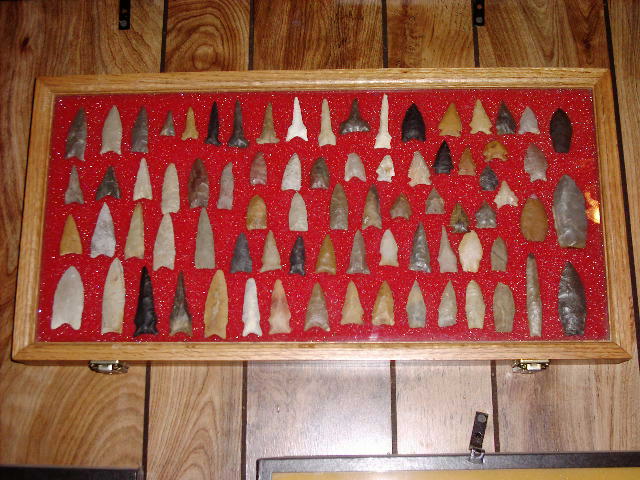
One Paleo Frame
Here are some of the Paleo Indian points I've found over the years. In this frame you can see Plainview, Dalton, San Patrice, Angostura, Midland, and other ancient point styles. |
|
|
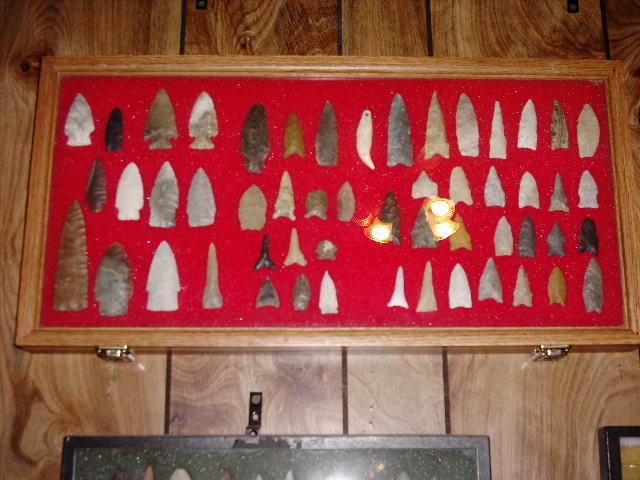
Another paleo Frame
Here is another frame of Paleo Indian points. Here you can see Scottsbluff and Hardin/Wilson points, Plainview and Dalton, my only two Clovis, and a variety of other types.
|
|
|
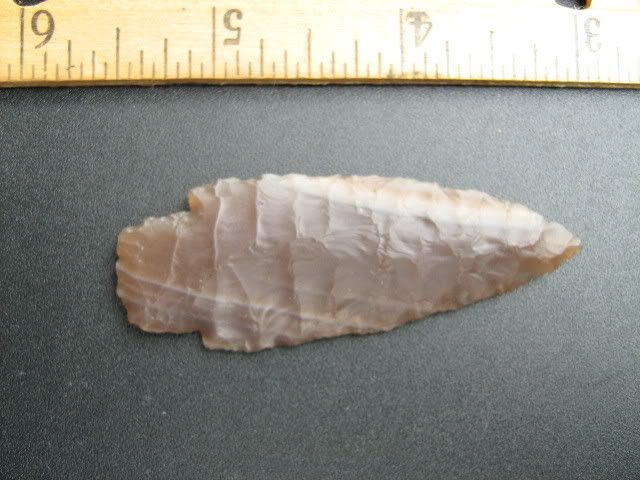
I just love this little beauty!
I found it one chilly fall day in 1992. I thought it was a frost-covered piece of beer bottle glass! It is so translucent you can read my catalog number on the reverse side when you hold it up to the light! Sadly, this piece no longer resides with me. Last summer my daughter had to have a CAT scan and we were between insurance policies, so Lyle Nickel, a well-known Oklahoma collector, offered to give it a good home. I went by his table at Temple, TX this year and visited with the little darlin', though, and she's doing just fine. If I ever strike it rich that point will be mine again!
|
|
|
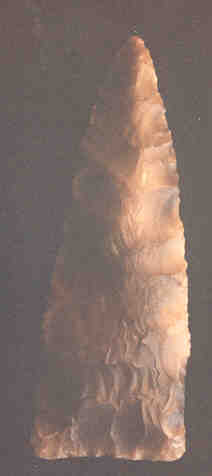
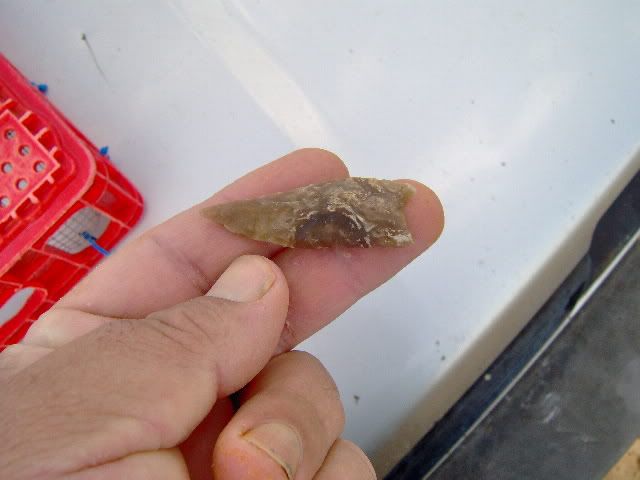
Another Scottsbluff close-up
This was my third Scottie ever. When I found it, only 1/2" of the tip was protruding from the mud. It is about 2 3/4" long. Sad to say, this piece is no longer in my collection - I sold it at the Temple show in July 2004.
|
|
|
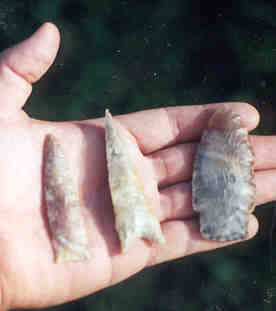
My three best points from 1990
They are Plainview, Dalton, and my first ever Scottsbluff. This picture captures the colors really well. The Plainview was the first Paleo point I ever sold; it's now in Gary Fogelman's collection. I've regretted letting it go, but my loss is his gain. I've never found a better Plainview! |
|
|
Beautiful Material on this one!
This is my nicest Paleo from 2006, a Plainview knife made of some neat sworled flint, found on one of my favorite low water sites.
|
|
|
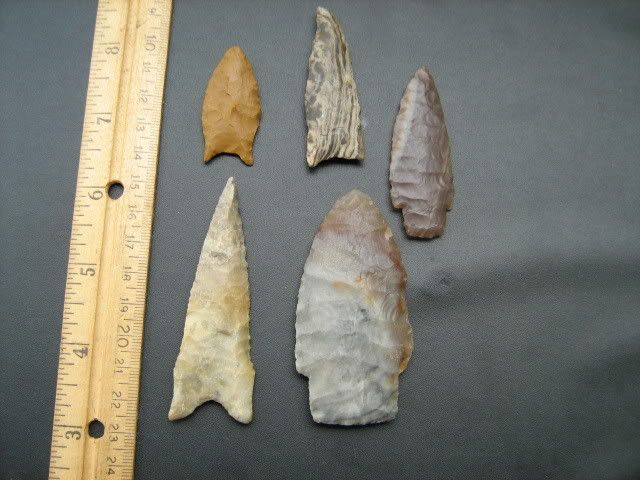
Five of my favorites. A jasper Hope-styel San Patrice, a striped agate Plainview, a novaculite Scottsbluff, a large and well-made Dalton, and of course the little rootbeer flint Scottie. For more Paleo points, look at my Ground/Polished artifacts page.
|
|
|